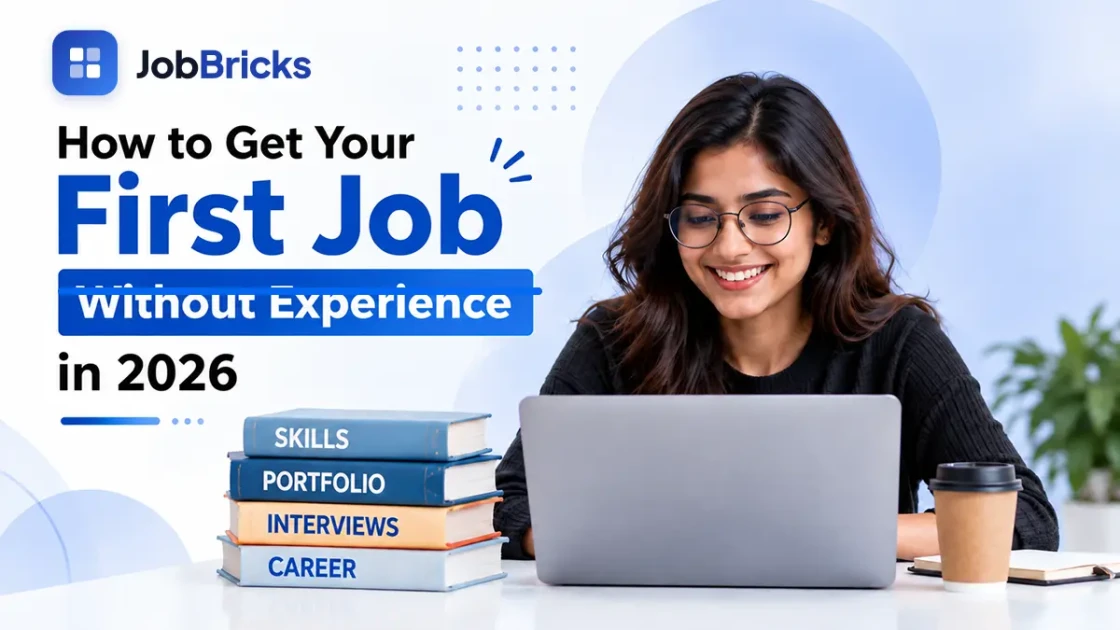
Getting your first job can feel difficult when every job description seems to ask for experience. You may have the right education, useful skills, and the drive to work. Still, you may wonder how you can land a job without any work experience.
The good news is that you do not need years of professional experience to start your career. In 2026, employers focus more on skills and practical knowledge. They also value communication and problem-solving.
Projects and internships matter too. Employers want candidates who are willing to learn.
Whether you are a new graduate, a college student, starting your career, or changing careers, you can impress employers.
You can impress employers at any stage. You can do this even without formal work experience.
This guide explains how to get your first job in 2026 without experience. It also shows how you can improve your chances of getting hired.
1. Understand What Employers Look for in Freshers
One of the biggest mistakes job seekers make is assuming that companies only hire candidates with previous work experience.
For entry-level jobs, employers understand that candidates may not have professional experience. Instead, they often look for proof that you can learn fast, speak clearly, solve problems, work well with others, and finish tasks responsibly.
Some important qualities employers may look for include:
- Communication skills
- Problem-solving ability
- Technical skills
- Teamwork
- Time management
- Adaptability
- Willingness to learn
- Basic industry knowledge
- Professional attitude
Instead of focusing only on the question, “How much experience do I have?”, think about, “What can I show an employer that proves I can do this job?”
That change in mindset can make your job search much more effective.
2. Build Skills That Match the Job You Want
If you do not have experience, your skills become even more important.
Start by choosing a specific career direction. For example, you could target jobs in software development, digital marketing, accounting, sales, customer support, graphic design, human resources, data analyzing, or administration.
Once you know what type of job you want, study the job descriptions for entry-level positions.
Look for skills that repeatedly appear in job postings.
For example, a junior web developer may need HTML, CSS, JavaScript, Git, and basic programming knowledge. A digital marketing fresher may need SEO, social media marketing, Google Analytics, content writing, or email marketing skills.
You do not need to learn everything at once. Focus on the skills that are most relevant to your target job.
3. Create Projects to Show Your Skills
Projects are one of the best ways to demonstrate your abilities when you do not have professional experience.
A project gives an employer something concrete to evaluate.
For example, if you’re aiming to become a software developer, you could create:
- A portfolio website
- A simple e-commerce website
- A task management application
- A job portal
- A mobile application
- An API-based project
If you are interested in digital marketing, you could create a small website. Work on its SEO. Prepare a content plan. Do keyword research. Track its performance.
Graphic designers can create branding concepts, social media designs, website layouts, or product designs.
Explain what you did, which tools you used, and what you learned.
You can include your projects on your resume, LinkedIn profile, GitHub account, portfolio, or other relevant platforms.
4. Get an Internship
An internship can be one of the easiest ways to move from being a student or fresher into the professional world.
Internships give you exposure to real projects, workplace communication, deadlines, teamwork, and professional tools.
Even a short internship can make your resume stronger because it gives you practical experience to discuss during interviews.
Seek internships related to your target career instead of applying randomly.
For example, if you aim to become a software developer, look for software development internships. If you want to work in HR, search for HR internships.
You can also consider remote internships if suitable opportunities are not available in your city.
5. Make a Strong Fresher Resume
Your resume does not need to be filled with years of employment history.
Instead, use your resume to highlight your education, skills, projects, certifications, internships, achievements, and relevant activities.
A simple fresher resume can include:
- Name and contact information
- Professional summary
- Technical or professional skills
- Education
- Projects
- Internships
- Certifications
- Achievements
- Relevant extracurricular activities
Keep the resume easy to read and focused on the job you are applying for.
Do not add skills that you cannot actually use. If an interviewer asks about a skill listed on your resume, you should be able to explain it confidently.
Also, customize your resume for different jobs when possible. If a job description highlights Excel, communication, and customer service, make your matching skills and experience easy to spot.
6. Build a Professional LinkedIn Profile
Your online presence can be important when you are searching for your first job.
Create a professional LinkedIn profile with:
- A clear profile photo
- A relevant headline
- A short About section
- Your education
- Skills
- Projects
- Certifications
- Internships
- Portfolio links
Do not simply write “Looking for a job” in your headline.
Instead, describe your career direction and skills.
For example:
“Computer Science Graduate | Java & Python Developer | Web Development | Open to Entry-Level Opportunities”
This immediately tells recruiters what type of candidate you are.
You can also share projects, certificates, useful industry knowledge, and learning progress on LinkedIn.
7. Apply for Entry-Level Jobs Strategically
Sending hundreds of random applications is not always an effective job search strategy.
Instead, focus on jobs that match your current skills and career goals.
Search for terms such as:
- Fresher jobs
- Entry-level jobs
- Junior jobs
- Graduate jobs
- Trainee jobs
- Associate jobs
- Internship opportunities
- Apprenticeships
When applying, read the job description carefully.
If a company asks for one or two years of experience but the rest of the requirements strongly match your skills, you may still consider applying, especially if the role appears suitable for an early-career candidate.
Do not reject yourself before the employer has reviewed your application.
8. Use Your College and Personal Network
Networking does not mean asking everyone for a job.
It means building genuine professional relationships.
Talk to:
- College professors
- Alumni
- Former classmates
- Friends
- Family contacts
- Industry professionals
- People you meet at career events
You can politely ask whether they know about entry-level opportunities related to your skills.
Freshers discover many job opportunities through referrals and professional connections, so networking can be valuable for them.
9. Prepare for Interviews Before You Apply
Do not wait until you receive an interview invitation to start preparing.
Freshers are often asked questions such as:
- Tell me about yourself.
- Why do you want this job?
- Why should we hire you?
- What are your strengths?
- What are your weaknesses?
- Why did you choose this career?
- Tell us about your project.
- What did you learn during your studies?
- Where do you see yourself in the next few years?
Prepare clear and honest answers.
You should also understand the company and its products or services. Learn the job role and basic requirements before the interview.
For technical positions, practice questions related to your core skills.
For non-technical roles, practice communication, situational, and role-specific questions.
10. Do Not Ignore Soft Skills
Technical skills can help you get noticed, but soft skills can strongly affect your interview performance and workplace success.
Important soft skills include:
- Communication
- Teamwork
- Time management
- Problem-solving
- Adaptability
- Professionalism
- Listening
- Confidence
You do not need to sound perfect during an interview.
Speak clearly, listen carefully, and answer honestly.
If you do not know an answer, say you are not familiar with the topic. Say you are willing to learn. Do not give a wrong answer with confidence.
11. Consider Freelancing and Small Projects
Freelancing can help you build practical experience before getting a full-time job.
For example, a fresher can work on small projects such as:
- Website development
- Content writing
- Graphic design
- Video editing
- Social media management
- Data entry
- SEO
- WordPress development
- Virtual assistance
These projects may not replace full-time employment, but they can help you develop practical skills and create work samples.
You can mention relevant freelance projects on your resume as practical project experience.
12. Use AI as a Job Search Assistant
AI tools can make the job search process more efficient in 2026.
You can use AI to help you:
- Improve your resume wording
- Understand job descriptions
- Practice interview questions
- Generate interview scenarios
- Identify skill gaps
- Create a learning plan
- Improve professional communication
However, do not copy AI-generated answers without understanding them.
Your resume should represent your real skills and experience. During an interview, you should be able to explain everything you have included in your application.
13. Keep Learning While Searching
Job searching should not mean sitting and waiting for replies.
Use the time to improve your skills.
For example, you can spend a few hours each day on:
- Learning a technical skill
- Building a project
- Practicing interviews
- Improving English or communication
- Completing relevant certifications
- Researching companies
- Updating your resume
- Applying for suitable positions
This creates a continuous improvement cycle.
Even if you do not get your first job immediately, you should become a stronger candidate every few weeks.
14. Avoid Common Fresher Job Search Mistakes
Many freshers make avoidable mistakes during their first job search.
Some common mistakes include:
- Using the same resume for every job
- Applying without reading the job description
- Adding fake skills or experience
- Ignoring internships
- Having an incomplete LinkedIn profile
- Not preparing for interviews
- Applying only to large companies
- Giving up after a few rejections
- Not building projects
- Expecting a high salary immediately
Remember your first job is a chance to enter the professional world. It helps you build practical skills. It also helps you learn how your industry works.
Salary and job title are important. But learning opportunities, mentorship, responsibilities, company culture, and career growth also matter. Consider these factors when evaluating an entry-level role.
15. Create a Simple 30-Day Job Search Plan
If you do not know where to start, create a 30-day plan.
During the first week, identify your target job role, analyze job descriptions, and identify the skills employers commonly request.
During the second week, improve your resume and LinkedIn profile. Start or complete at least one practical project.
During the third week, begin applying to relevant jobs and internships. At the same time, practice common interview questions.
During the fourth week, continue applications, contact your professional network, attend interviews, and improve your skills based on feedback.
Track your applications in a simple spreadsheet. Record the company name, job title, application date, application status, interview date, and follow-up date.
This makes your job search organized instead of random.
Final Thoughts
Getting your first job in 2026 is hard without experience, but you still have a lot to offer.
Your education, skills, projects, internships, certifications, communication ability, and willingness to learn can all help you demonstrate your potential.
The most important step is to stop waiting until you feel completely ready.
Choose a career path. Build the right skills. Create practical projects. Write a strong resume. Improve your professional profile. Apply often and consistently. Practice for interviews.
Your first job may not be your dream job, and that is okay. The goal is to start building professional experience and continue growing from there.
With a focused approach and consistent effort, you can turn your skills into your first professional opportunity.
Start your job search with JobBricks and explore opportunities that match your skills, education, and career goals.